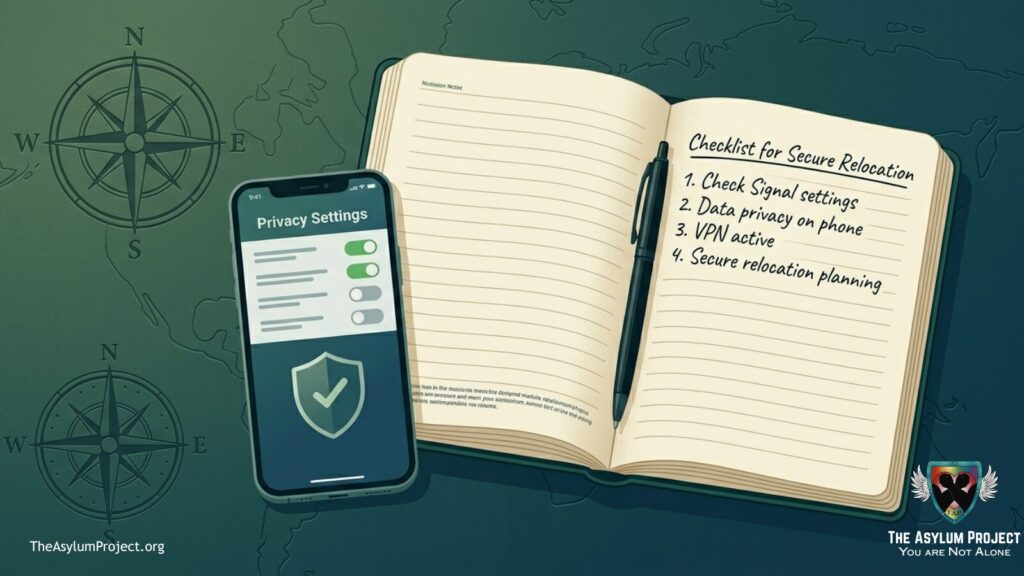
Planning a move to a more welcoming environment is a powerful, courageous step toward a safer and more authentic life. While the journey involves many moving parts—from sorting out housing to organizing documentation—incorporating secure relocation planning into your routine is one of the most impactful ways you can care for yourself and your loved ones right now by taking control of your digital privacy.
In our connected world, our phones, apps, and online searches leave small trails of data. When you are preparing to relocate, protecting these digital footprints is not about living in fear; it is a practical, empowering tool to ensure your transition happens entirely on your own terms and timeline.
Here is a gentle, step-by-step guide on how to secure your digital space as you plan your path forward.
1. Shift to Secure Messaging
When discussing your relocation plans, logistics, or sensitive personal details, consider moving your conversations off standard SMS text messages or mainstream social media DMs.
- What to do: Use communication apps that offer automatic end-to-end encryption, such as Signal. This ensures that only you and the person you are messaging can read the conversation.
- A mindful tip: You can also enable “disappearing messages” in your settings. This keeps your conversation history clean and ensures that if your phone is ever misplaced, your private plans stay private.
2. Take Control of Your Location Services
Many apps on our phones quietly track our location in the background, attaching geographical data to photos, weather updates, and social media check-ins.
- What to do: Go into your phone’s primary settings menu and review which apps have permission to see your location. Switch them to “Never” or “Only While Using the App.” For absolute peace of mind during sensitive travel or meetings, you can temporarily turn off location services entirely or use airplane mode.
- A mindful tip: Before sharing photos with support networks or family, remember that smartphone cameras often embed the exact location where the photo was taken into the file. Turning off location permissions for your camera app prevents this data from being shared.
3. Rethink Your Search and Browsing Habits
When you are researching new cities, employment opportunities, legal resources, or community groups, your standard web browser saves your history and uses it to target advertisements.
- What to do: Consider using privacy-focused search engines like DuckDuckGo, which do not track your search history or build a profile on you. Additionally, utilizing a trusted Virtual Private Network (VPN) can help mask your internet activity from local networks or service providers.
- A mindful tip: Get into the habit of using your browser’s “Incognito” or “Private” mode when researching relocation resources, and regularly clear your browser cookies and history.
4. Adjust Social Media Sharing
Connecting with community online can be a wonderful source of strength, but it is wise to be intentional about what is visible publicly.
- What to do: Take a few minutes to update your privacy settings across all social platforms. Set your accounts to “Private” so that only trusted, verified friends can see your posts, friends lists, and photos.
- A mindful tip: Hold off on posting updates about your relocation journey, new job opportunities, or your new location until you have safely arrived and settled in. Encourage well-meaning friends and family to avoid tagging you in locations or posting about your travel plans publicly.
Moving Forward with Secure Relocation Planning
By prioritizing secure relocation planning and securing your digital privacy, you create a safe, quiet space for yourself to focus on what truly matters: building your bright, welcoming future. You are in control of your story, your data, and your journey.
If you need tailored guidance or secure resources as you plan your next steps, please reach out to The Asylum Project. We are here to walk alongside you, respecting your pace and prioritizing your safety every step of the way. You can also check out resources from these other amazing organizations:
- Movement Advancement Project (MAP) – Provides updated maps tracking state-by-state policy environments for accurate risk assessment.
- Digital Defense Fund – Offers excellent, accessible toolkits and guides regarding digital privacy, secure messaging, and data protection for vulnerable communities.
- National Disability Rights Network (NDRN) – Offers cross-state coordination guides for individuals requiring continuity of medical care and public benefits during relocation.