In recent weeks, rapid shifts across federal administrative policy and court dockets have created a complex landscape for vulnerable communities. At the center is a critical asylum work permit ruling that temporarily halts proposed rollbacks. Among the most critical developments is a recent court ruling temporarily halting proposed rollbacks to work-authorization access for asylum seekers.
While this court pause provides immediate relief, it also underscores an ongoing reality for immigrants and service providers: short-term legal protections often exist alongside long-term policy uncertainty.
For philanthropic partners, community organizations, and direct service providers, understanding the mechanics of this ruling is essential to deploying rapid, high-impact support where it is needed most.
1. Impact of the Asylum Work Permit Ruling
The court’s decision temporarily stops administrative efforts to curtail or delay Employment Authorization Documents (EADs) for people navigating the U.S. asylum system.
The Immediate Impact
- Work Authorization Preserved: Asylum seekers with pending applications or temporary relief can continue to apply for or renew work permits without facing newly proposed administrative delays.
- Financial Stability: Preserving legal employment access ensures individuals and families can support themselves, pay for housing, and contribute to local economies while their cases proceed through the immigration courts.
- Employer Certainty: Local businesses relying on legally authorized workers avoid sudden workforce disruptions.
The Limits of a Judicial Pause
It is vital to recognize that a court order blocking a rule change is not a permanent policy resolution.
- The underlying litigation remains ongoing, meaning rules could be reinstated or altered depending on higher court appeals.
- A legal pause does not automatically clear existing processing backlogs at administrative agencies.
- Related programs, such as Temporary Protected Status (TPS) for groups like Haitian nationals, continue to face distinct legal challenges and sunset dates that require separate legal interventions.
2. Why Direct Services Need Urgent Support Now
Legal pauses create a narrow window of opportunity. To capitalize on court-ordered protections before further legal shifts occur, community organizations face an immediate surge in demand across three main areas:
- Legal Representation and Filing Support: Thousands of asylum seekers need assistance immediately submitting work-authorization applications and renewals to lock in protections while the pause remains active.
- Case Management and Health Navigation: Beyond paperwork, families require support securing stable housing, navigating healthcare access, and addressing trauma.
- Information Integrity and Community Trust: Misinformation spreads quickly during legal transitions. Communities need vetted, trauma-informed guidance so individuals do not fall victim to legal scams or miss crucial filing deadlines out of fear.
3. Strategic Roadmap for Donors Following the Asylum Work Permit Ruling
Philanthropic investment during periods of policy flux yields outsized results. By focusing on rapid-response and capacity-building grants, donors can help stabilize community infrastructure.
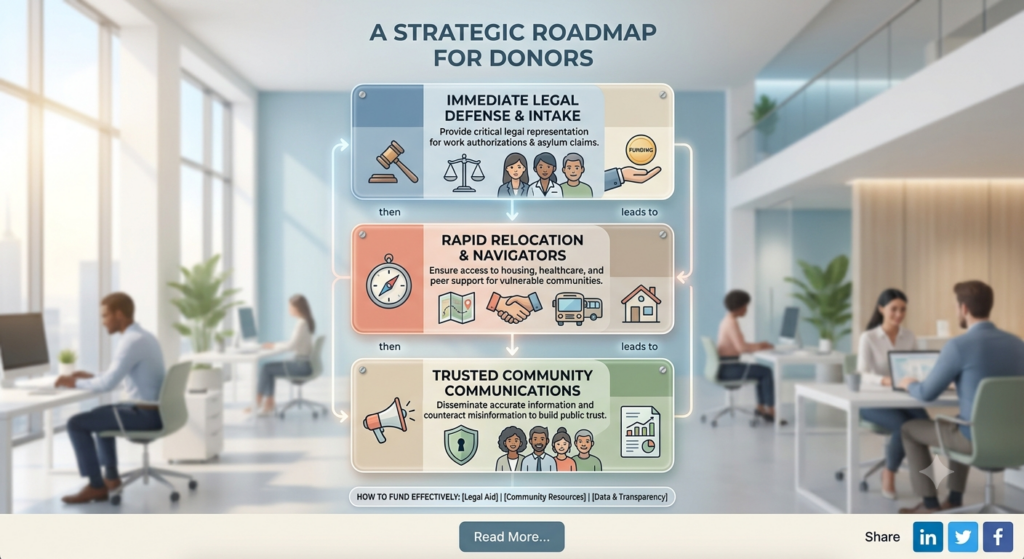
High-Impact Funding Priorities:
- Fund Legal Aid Capacity: Expand staffing at legal clinics to handle high-volume EAD intake and court representation.
- Support Community Navigators: Invest in trusted, bilingual caseworkers who bridge the gap between legal teams and affected families.
- Strengthen Coalition Infrastructure: Provide general operating support for regional rapid-response networks so organizations can coordinate seamlessly when legal shocks occur.
4. How Community Organizations Can Respond Today
For direct service providers and advocacy groups on the ground, proactive measures are key to navigating the weeks ahead:
- Host Targeted Legal Clinics: Organize low-barrier intake sessions focused specifically on work-permit filings and status checks.
- Establish Confidentiality Safeguards: Ensure all client data, intake records, and communication channels adhere to strict privacy standards to protect individuals from potential exposure.
- Partner with Trusted Allies: Build cross-sector referral pipelines connecting legal defense organizations with local healthcare providers, food banks, and housing advocates.
How You Can Take Action
Whether you are a funder looking to maximize charitable impact or a service provider expanding intake capacity, strategic coordination is essential to protecting community stability.
- For Donors: Consider contributing to rapid-response immigration defense funds or organizations providing holistic case management, such as the International Rescue Committee (IRC), Refugees International, National Immigration Law Center, or your local legal aid society.
- For Service Providers: Ensure your staff is equipped with updated, vetted legal summaries and client privacy protocols.