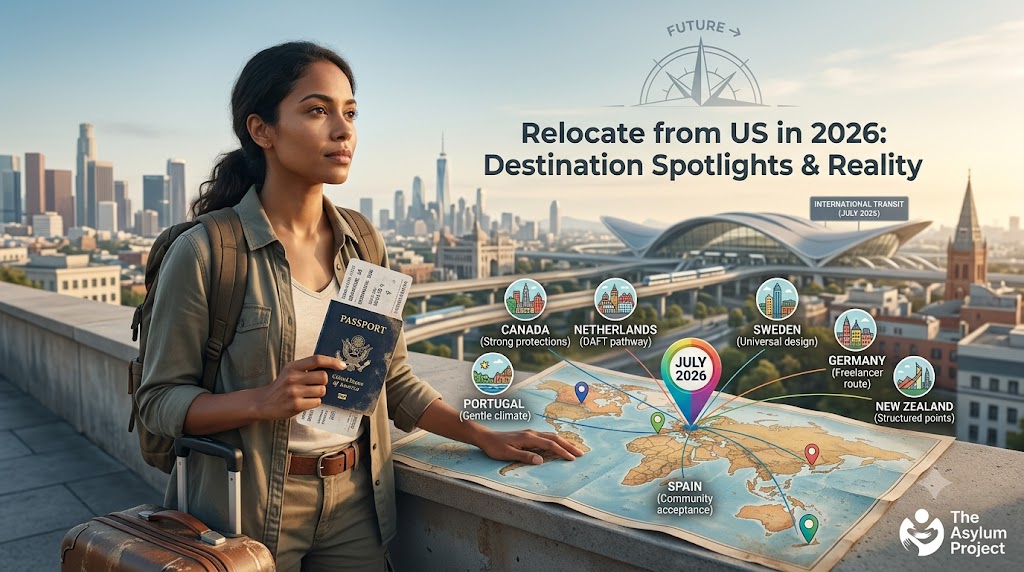
Relocating to find a safer, more inclusive home is a powerful and deeply personal choice. Whether you are seeking a community that fully embraces your LGBTQ+ identity, a society committed to dismantling systemic racism, or physical infrastructure designed with disability access in mind, the desire to find a welcoming refuge is completely valid.
However, we need to have an honest, peer-to-peer conversation. The dream of “just moving” or finding an easy asylum pathway is becoming increasingly difficult. For those who want to relocate from the US in 2026, the global migration landscape has shifted dramatically, making standard immigration visas a far more viable route. making standard immigration visas (like skilled worker or passive income programs) a far more viable route for Americans than traditional asylum.
Here is our honest breakdown of the top global destinations for July 2026, weighing their progressive values against realistic immigration hurdles.
What to Know Before You Relocate from US in 2026
Before diving into individual countries, it is critical to understand two major policy shifts that occurred just months ago. These changes mean that the “open door” reputations of Canada and the EU no longer apply in the way they once did:
- Canada’s Bill C-12 (Passed March 26, 2026): This new law severely restricts the asylum process. It bars asylum claims filed more than one year after your first entry into Canada. Furthermore, if you cross the land border between official ports of entry, you must file your claim within 14 days.
- The EU Pact on Migration and Asylum (Effective June 12, 2026): The European Union has implemented a strict, harmonized border and asylum screening process. It introduces a rapid 21-day filing window, expanded border screenings, and fast-tracked deportations for denied applicants.
The Takeaway: If you are relocating from the U.S., your best and safest strategy is to pursue formal, visa-based immigration pathways (like skilled migrant, freelance, or digital nomad visas) rather than relying on an asylum claim.
Side-by-Side Comparison of July 2026 Spotlights
| Destination | Primary Visa Route for U.S. Citizens | LGBTQ+ Climate | Disability Accessibility |
| Canada | Express Entry / Provincial Nominee | Top-tier; constitutionally protected | High standards; Accessible Canada Act (2040 goal) |
| Netherlands | DAFT (Self-Employed) Visa | Historic leader; robust protections | High urban access; EU Accessibility Act standards |
| Portugal | D7 (Passive Income) or Digital Nomad | Highly progressive; legal self-determination | Improving in major cities; older infrastructure lags |
| Spain | Non-Lucrative or Digital Nomad | Exceptional public acceptance (>80%) | Comprehensive national laws & EU standards |
| New Zealand | Points-based Skilled Migrant | Strong legal protections; highly inclusive | Lacks dedicated statute; stalled legislative progress |
| Sweden | Work Permits / Study Visas | Historically strong; youth gender care under debate | Universal design; high public compliance |
| Germany | EU Blue Card / Freelancer Visa | Solid legal protections & trans rights | High transit access; strict private insurance rules |
Deep-Dive Destination Profiles

1. Canada (Our Strongest Overall Pick)
Canada remains a premier destination for those looking to relocate from the US in 2026, though you must navigate its system strategically.
- Immigration Pathways: The Express Entry and Provincial Nominee Programs remain excellent for skilled professionals.
- LGBTQ+ Protections: Marriage equality has been federal law since 2005. SOGI (Sexual Orientation and Gender Identity) persecution is officially recognized as asylum grounds, supported by community initiatives like the Rainbow Refugee program.
- Racial Equity: Ranks 5th globally on racial equity (US News), backed by an official multiculturalism policy and the Canadian Human Rights Act.
- Disability Infrastructure: Guided by the Accessible Canada Act, which targets a barrier-free country by 2040.
- The Big Caveats: Canada enforces a high medical cost threshold ($25,000/year in healthcare costs) for residency, meaning disabled or chronically ill applicants may face administrative delays. Additionally, remember that Bill C-12 has ended the old, unrestricted asylum filing windows.

2. The Netherlands
Known for its progressive social fabric, the Netherlands is especially friendly to self-employed Americans looking to relocate from the US in 2026.
- Immigration Pathways: The Dutch American Friendship Treaty (DAFT) is a major advantage, allowing self-employed Americans and freelancers to gain residency with low capital requirements (verify current terms via Dutch IND).
- LGBTQ+ Protections: The first country in the world to legalize same-sex marriage (2001). It features robust constitutional protections and active SOGI-based asylum recognition.
- Racial Equity: Ranks 4th globally on racial equity (US News), though newcomers of color may face subtle social integration hurdles. Orgs like NewBees provide strong community support.
- Disability Infrastructure: Excellent physical access in public transit, aligned with the EU Accessibility Act. There is no strict medical exclusion rule.
- The Big Caveats: The newly implemented EU Pact on Migration and Asylum has severely tightened border screening and fast-tracked deportations.

3. Portugal
Portugal is an affordable, sun-drenched option that offers an incredibly gentle social climate, though physical accessibility remains a hurdle.
- Immigration Pathways: The D7 (Passive Income) Visa and Digital Nomad Visa are accessible pathways for Americans who are financially self-sufficient.
- LGBTQ+ Protections: Marriage equality has been protected since 2010, with progressive gender self-determination laws active since 2011.
- Racial Equity: Ranks 16th globally on racial equity. It has strong anti-discrimination laws, supported locally by advocacy groups like SOS Racismo.
- Disability Infrastructure: While the EU Accessibility Act applies, Portugal’s historic cities—with cobblestone streets and older, unretrofitted buildings—lag behind modern physical accessibility standards.
- The Big Caveats: Portugal requires proof of private health insurance for most independent visas, and navigating the public health system can take considerable time until permanent residency is secured.

4. Spain
If community acceptance is your top priority, Spain boasts some of the most vibrant, welcoming queer spaces in the world.
- Immigration Pathways: The Digital Nomad Visa and Non-Lucrative Visa are highly workable for Americans with remote jobs or sufficient personal savings.
- LGBTQ+ Protections: Boasts a public LGBTQ+ acceptance rate of over 80%. Madrid and Barcelona host massive, politically active queer and trans communities.
- Racial Equity: Ranks 18th globally on racial equity (US News index).
- Disability Infrastructure: Spain boasts one of Europe’s most thorough accessibility frameworks, codified in its 2013 General Law on the Rights of Persons with Disabilities.
- The Big Caveats: Like Portugal, Spain falls under the stricter new EU asylum procedures and requires proof of private health insurance for many entry visas.

5. New Zealand
For those seeking breathtaking landscapes and highly rated social equity, New Zealand is a dream for those looking to relocate from the US in 2026—if you can clear the high points threshold.
- Immigration Pathways: Highly structured and points-based. This skilled-worker focus makes New Zealand the hardest country on this list for the average person to migrate to. There is no low-barrier equivalent to DAFT or the D7 visa.
- LGBTQ+ Protections: Marriage equality since 2013, supported by strong, comprehensive anti-discrimination laws.
- Racial Equity: Ranks an impressive 3rd globally on racial equity (US News index). However, domestic disparities for indigenous Māori and Pacific communities persist.
- Disability Infrastructure: While protected broadly by the Human Rights Act 1993, New Zealand still lacks a dedicated, standalone accessibility statute (a major bill stalled in 2023, with revival decisions pushed to the 2026–2027 cycle).
- The Big Caveats: New Zealand enforces strict medical cost thresholds for residency. Applicants with chronic illnesses or significant disabilities face slow, intensive administrative reviews.

6. Sweden
Sweden is a global model for universal social design, though it is experiencing some domestic policy shifts.
- Immigration Pathways: Accessible via work permits, study visas, and self-employment. Notably, Sweden does not enforce a blanket medical ban for incoming residents.
- LGBTQ+ Protections: Progressive laws on marriage, adoption, and gender recognition, though local debates surrounding youth gender-affirming care have increased.
- Racial Equity: Excellent legal protections, though integration challenges for non-European BIPoC newcomers remain an ongoing national dialogue.
- Disability Infrastructure: Exceptional physical accessibility, mandatory universal design principles, and a robust public healthcare framework.

7. Germany
For those looking to live in the economic heart of Europe, Germany offers strong freelancer opportunities and vibrant urban life.
- Immigration Pathways: Accessible options include the EU Blue Card, Job Seeker Visa, and the highly popular Freelancer Visa.
- LGBTQ+ Protections: Comprehensive legal protections, marriage equality, and strong trans rights.
- Racial Equity: Legally protected, with supportive expat organizations like Each One Teach One helping BIPoC newcomers adjust.
- Disability Infrastructure: Mandatory healthcare coverage, high transit accessibility, and extensive physical infrastructure.
- The Big Caveats: German health insurance requirements are notoriously rigid. Private insurers are allowed to limit or deny coverage for certain pre-existing conditions, which can complicate the transition for disabled or chronically ill expats.
Finding Your Path Forward
Relocating is a journey of compromises. While Canada offers the strongest overall protections, its new asylum laws are strict. While Portugal offers affordability and a gentle pace of life, its historic infrastructure can be tough on those with physical disabilities.
If you are preparing to make the leap, focus on formal, visa-based immigration pathways rather than relying on the tightening safety net of international asylum. Do your research, plan your finances, and step forward with clear eyes.
Pack Your Plans with Facts, Not Just Hope
Navigating international laws, medical thresholds, and changing visa policies can feel incredibly overwhelming—especially when you are searching for a true place of safety.
To help you sort through the noise, we have built the July 2026 Destination Spotlight Fact Sheet. This free, high-density PDF resource is designed to be your quick-reference anchor.
Inside the downloadable guide, you will find:
- The 2026 Policy Cheat Sheet: A clear timeline breakdown of Canada’s Bill C-12 and the EU’s new unified Migration Pact.
- The Spotlight Matrix: A side-by-side comparison of the featured countries.
- Detailed Medical & Financial Limits: Specific numbers on medical inadmissibility (like Canada’s $25,000 threshold) and private healthcare requirements.
- Primary Immigration Portals: Direct access to navigate official entry tracks including the Canadian IRCC, Dutch IND, Portuguese Vistos, Spanish Exteriores, Immigration New Zealand, Swedish Migrationsverket, and Make It In Germany portals.
- Civil Rights Tracking: Direct paths to verify legislative metrics via global tracking databases like Equaldex and ILGA World.
- Healthcare Resources: Comprehensive navigation tools for chronic illness and disability policies via the Expatsi Disabled Expat Guide.
Don’t guess on your future. Step forward with data and clear eyes.